Infinitee Growth Model
Productizing the service model to reduce decision paralysis for SMBs.
00
problem
Infinitee faced a scalability barrier common in professional services: the trap of "bespoke chaos." By offering open-ended, custom marketing solutions to SMB clients who often lacked technical sophistication, we inadvertently created high cognitive load during the sales process. This lack of defined pathways led to severe decision paralysis for prospective clients and prevented them from understanding their specific needs. Internally, the absence of a standardized service architecture caused operational bottlenecks, hindering the agency's ability to streamline workflows and scale delivery efficiently
solution
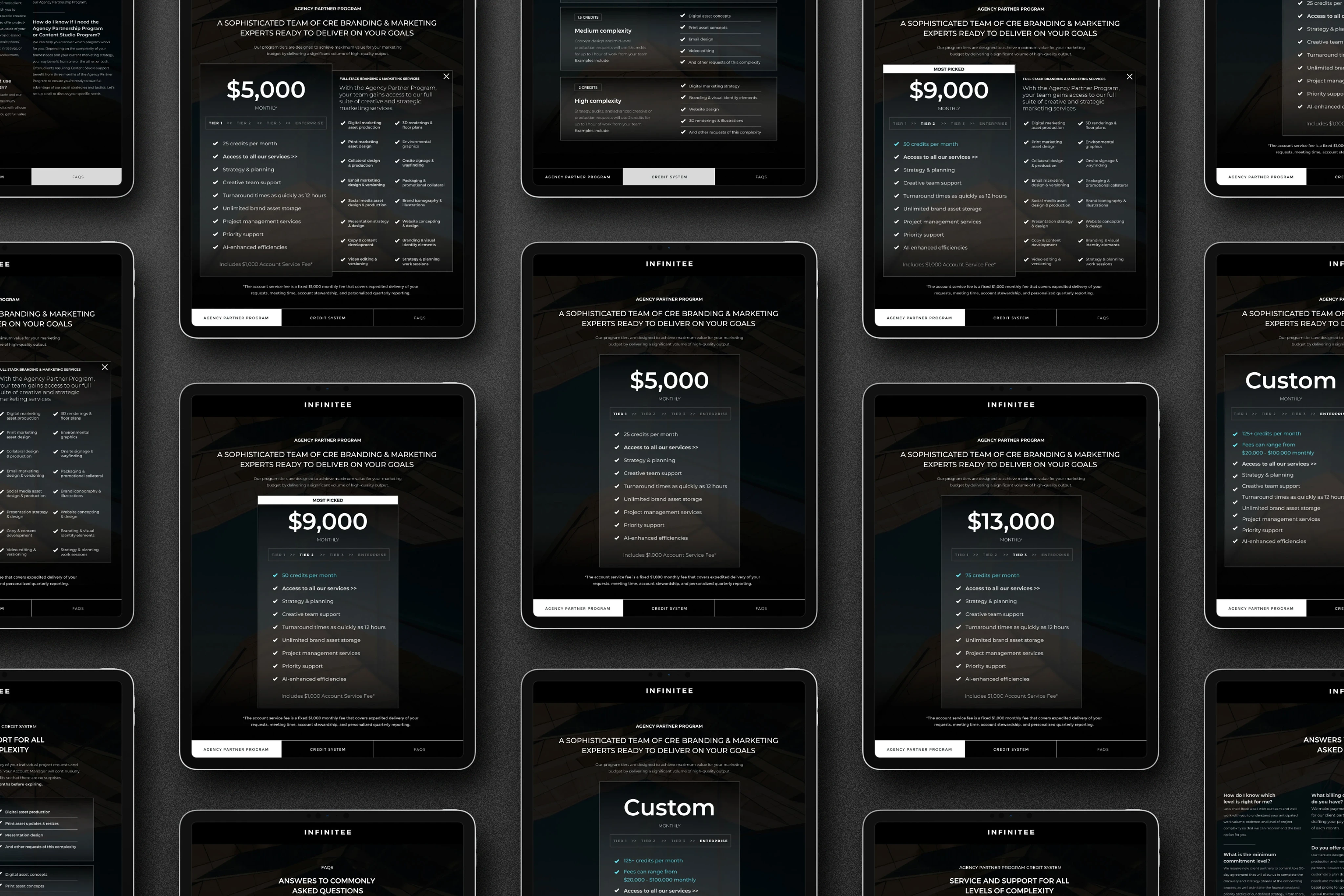
To solve this, we shifted from selling "hours" to selling "outcomes" by architecting the Infinitee Growth Model—a tiered product ecosystem mapping directly to client maturity stages. I collaborated with Strategy to define the Information Architecture and designed a comparative pricing interface utilizing standard B2B SaaS patterns to guide user behavior. This system empowered users to self-segment based on their business goals, drastically reducing decision friction while establishing robust internal SOPs that allowed delivery teams to execute with predictable, scalable precision
The journey to productize Infinitee’s service model began with a critical realization: our clients weren't looking for flexibility; they were looking for prescription. Inspired by the principles of behavioral economics—specifically Hick’s Law—I identified that offering an abundance of "a la carte" choices was actually hurting our conversion rates. We set out on a mission to transform our bespoke agency services into a structured product ecosystem that would empower SMBs to make confident buying decisions without the need for lengthy negotiation cycles.
Our team meticulously analyzed client data and identified three distinct stages of business maturity: Validation, Growth, and Dominance. Armed with this insight, we architected a tiered framework—Silver, Gold, and Platinum—that served as a strategic roadmap for our clients. We moved away from vague deliverables and defined clear, value-based feature sets for each tier. This wasn't just a pricing exercise; it was a total restructuring of the business logic to align with user needs, ensuring that a startup wouldn't be overwhelmed by enterprise-level options.
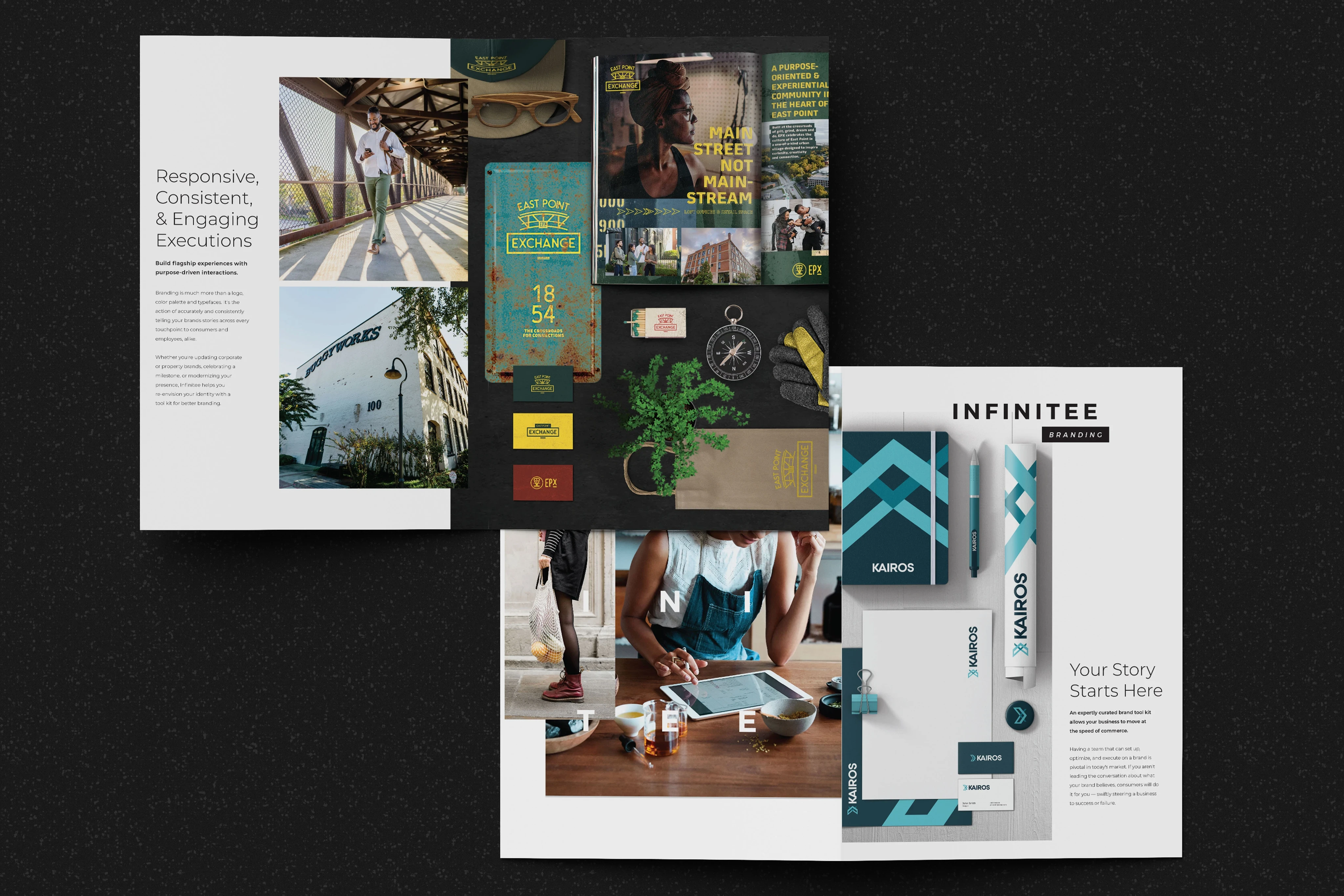
Parallel to this structural overhaul, we recognized that a robust product architecture requires a visual language that builds trust. We executed a comprehensive brand refresh to ensure the new "system" felt cohesive and premium. I developed a modular visual identity that visually distinguished the service tiers, using clear visual hierarchy and standardized brand language to guide users intuitively from "Validation" to "Dominance." This branding work wasn't just aesthetic; it was a functional layer of the user experience, ensuring that the external brand promise matched the internal operational clarity.
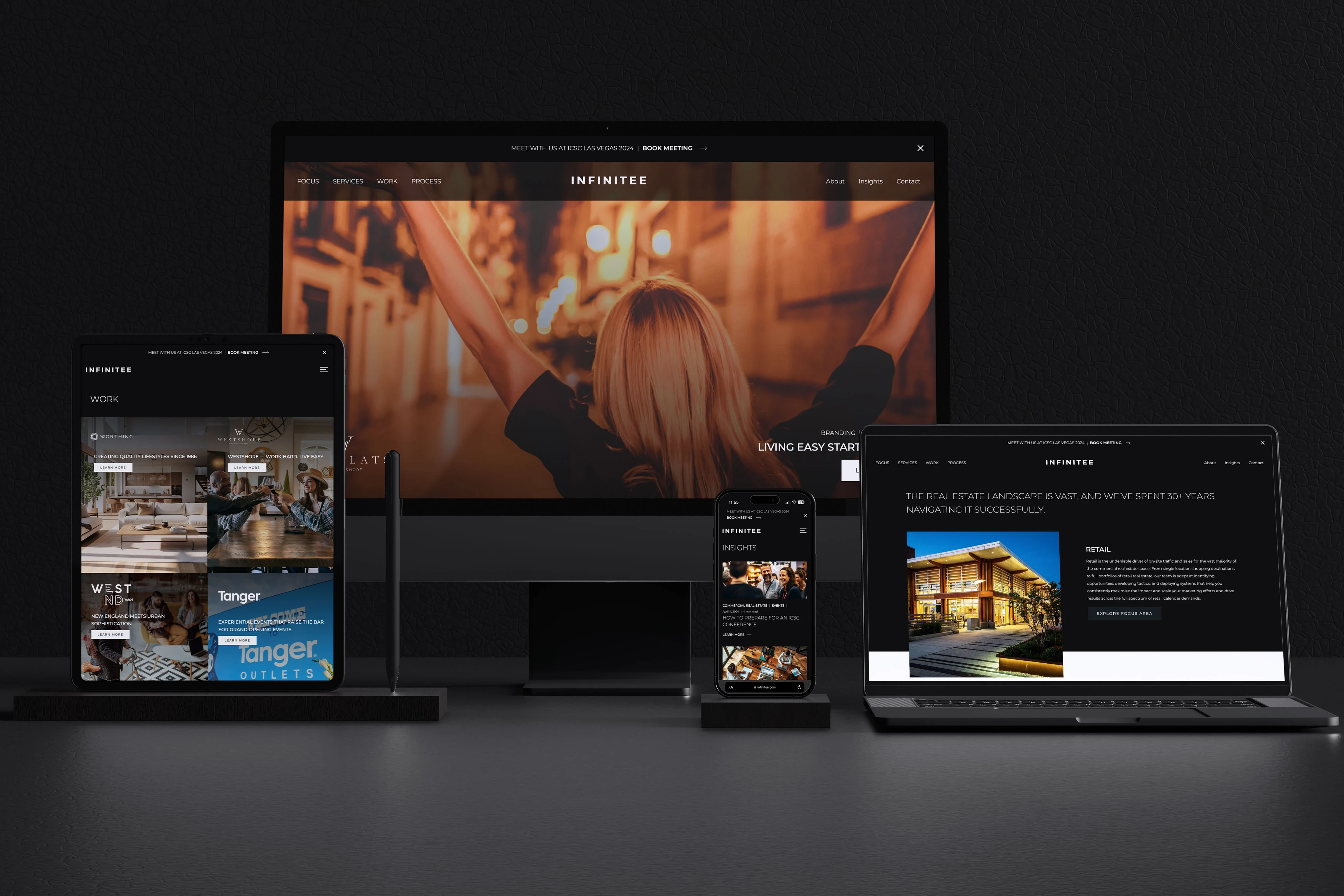
Throughout the design phase, I focused on translating this complex logic into an intuitive user interface. We incorporated standard SaaS comparison patterns, utilizing visual anchoring to highlight the "Gold" tier as the optimal path for ROI. The goal was to reduce cognitive load and build trust through familiarity. Simultaneously, we worked to operationalize this system internally, developing Standard Operating Procedures (SOPs) for every tier. This ensured that once a client clicked "Select," our delivery teams could execute immediately using standardized playbooks rather than reinventing the wheel.
Since the implementation of the Growth Model, the impact has been transformative for both the user experience and business operations. The agency witnessed a significant lift in conversion as clients were able to self-select the right package before the first sales call. By bridging the gap between bespoke service and productized scalability, we not only shortened the sales cycle but also created a more sustainable, efficient ecosystem that allows the agency to scale its impact without linearly scaling its headcount.
year
2024
timeframe
90 days
client
Infinitee
category
Service Design, Branding
01
02

03
see also